
Wide-open, uncovered terrain—such as abandoned desert zones, massive industrial flatlands, or frozen glacial expanses—presents the greatest challenge to Raider stealth. In the absence of physical cover (IFT), the ARC Sensor Array achieves maximum efficiency, utilizing long-range optical, thermal, and radar systems to eliminate human movement. **Sensor Array Evasion (SAE)** is the specialized doctrine dedicated to minimizing all detectable signatures across exposed ground, ensuring survival where natural concealment is impossible.
This analysis details the three primary signatures Raiders must mitigate—visual, thermal, and electromagnetic—and outlines the necessary protocols for crossing high-exposure zones.

Signature 1: Visual and Optical Lock
In uncovered terrain, the greatest threat is direct optical lock by long-range ARC units (DM assets, aerial scouts). SAE mitigates this via two primary methods:
- **Low-Profile Traversal:** Utilizing the crawl or low crouch, even over long distances, to minimize the Raider’s profile relative to the horizon, adhering to Interface Austerity (IA) for full visual focus.
- **Stutter Movement and Irregularity:** Avoiding predictable, linear movement patterns (ABA). Raiders must move in short bursts and utilize randomized, non-linear vectors to defeat the machine’s predictive targeting algorithms (AAD counter).
Signature 2: Thermal and Heat Emission (ASW)
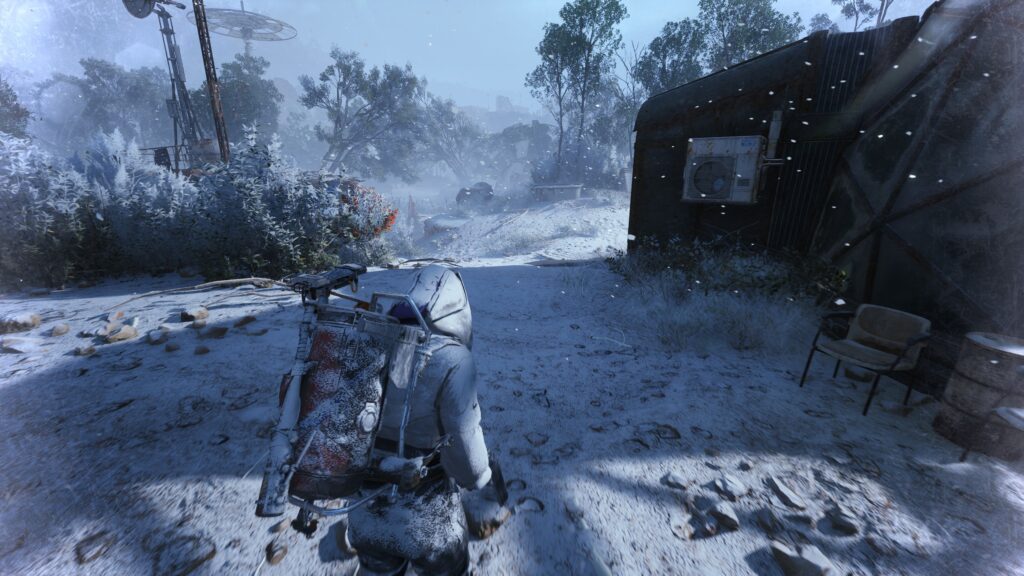
Exposed terrain offers no natural thermal sinks, making heat signature the dominant factor in ARC tracking (ASW). SAE requires proactive thermal mitigation:
| Thermal Activity | SAE Protocol | Rationale |
|---|---|---|
| **Physical Exertion (Sprint)** | Avoid sustained high-speed movement; utilize short bursts followed by stationary cool-down. | Minimizes core body temperature spike that triggers long-range thermal lock. |
| **Concealment** | Utilize large, cold objects (boulders, metal debris) to break the direct heat vector. | Forces the ARC sensor array to attempt a difficult edge-detection lock. |
Signature 3: Electromagnetic and Acoustic Detection
Uncovered terrain amplifies all acoustic and electromagnetic signatures. SAE requires strict adherence to Acoustic Signature Mitigation (ASM), demanding near-total silence. Furthermore, prolonged use of active electronics (unshielded radios, constantly cycling gadgets) risks detection by ARC’s electromagnetic radar. Raiders must turn off all non-essential emitting gear when crossing exposed ground.
The Role of Environmental Cover (The Shadow Zone)

Since physical cover is absent, SAE utilizes **Temporal Concealment**. Crossing should be scheduled during transitional periods (dusk/dawn, CBM) or when external factors—such as heavy fog, windstorms, or environmental smoke (VIS)—create a temporary “Shadow Zone.” These conditions degrade the efficiency of ARC’s optics, providing a critical movement window.
Crossing Protocol: The Go/No-Go Decision
The crossing of exposed terrain is the highest-risk activity. The “Go/No-Go” decision is based on a simultaneous assessment of the three primary signatures. If any signature (e.g., thermal) cannot be mitigated below the known detection threshold of the local ARC threat (MIA), the crossing must be delayed, regardless of LPO mission deadlines.
Conclusion: The Ghost in the Open

Sensor Array Evasion transforms the exposed landscape from a killing ground into a traversable corridor. By systematically mitigating visual, thermal, and electromagnetic signatures, Raiders confirm that even in the absence of cover, disciplined human action can defeat the relentless sensory grid of the ARC Collective.